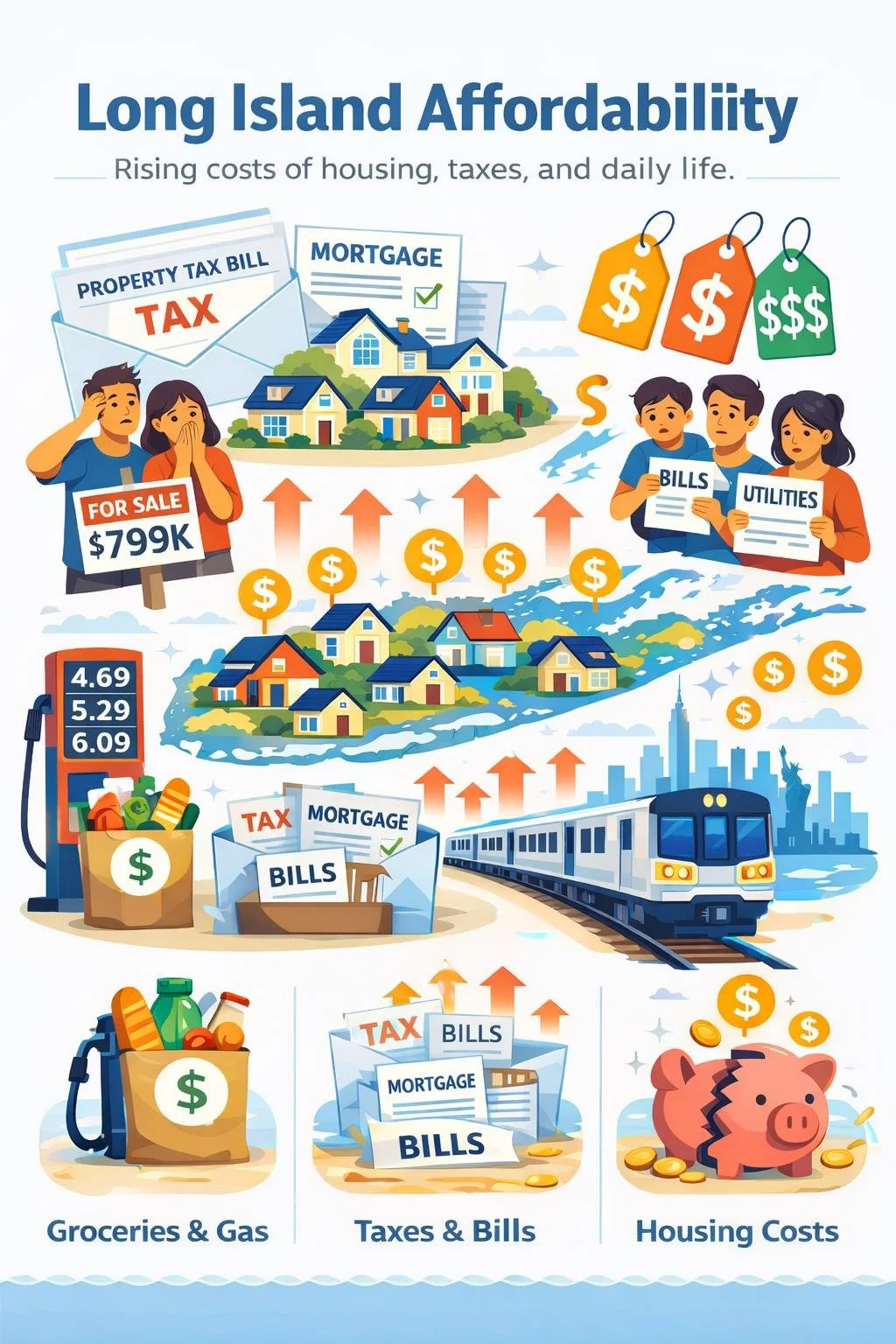
Long Island Affordability (2026)
Long Island, NY faces a severe affordability crisis, driven by high housing costs, taxes, and limited supply. Roughly 56% of renters pay over 30% of their income on housing, while high demand and low inventory (4.3% vacancy rate) continue to drive up prices. Key issues include expensive childcare ($12k–$20k/year), high utility bills, and a $14.8 billion tax imbalance where the region sends more to the state than it receives.
Key Affordability Challenges
Housing Market: Home prices remain near record highs despite higher interest rates. 64% of renters cannot afford a typical two-bedroom apartment.
Cost of Living: High expenses for food, transportation, and utilities contribute to the strain.
Young Adult Exodus: 55% of 20-to-34 year-olds live with parents or relatives due to costs.
Poverty Pockets: Despite high median incomes, specific areas face significant poverty, particularly for female-headed households.
Mitigation & Development Efforts
State Initiatives: The FY 2026 state budget includes $4 billion in relief, featuring middle-class tax cuts, an inflation rebate, and a $1,000 child tax credit.
Development: The Long Island Forward Housing Program (LIFHP) aims to increase multi-family housing, particularly near train stations.
Resources: Organizations like the Long Island Housing Partnership (LIHP) offer, for instance, the Plus One ADU Program for accessory apartments.