How Do Potholes Form?
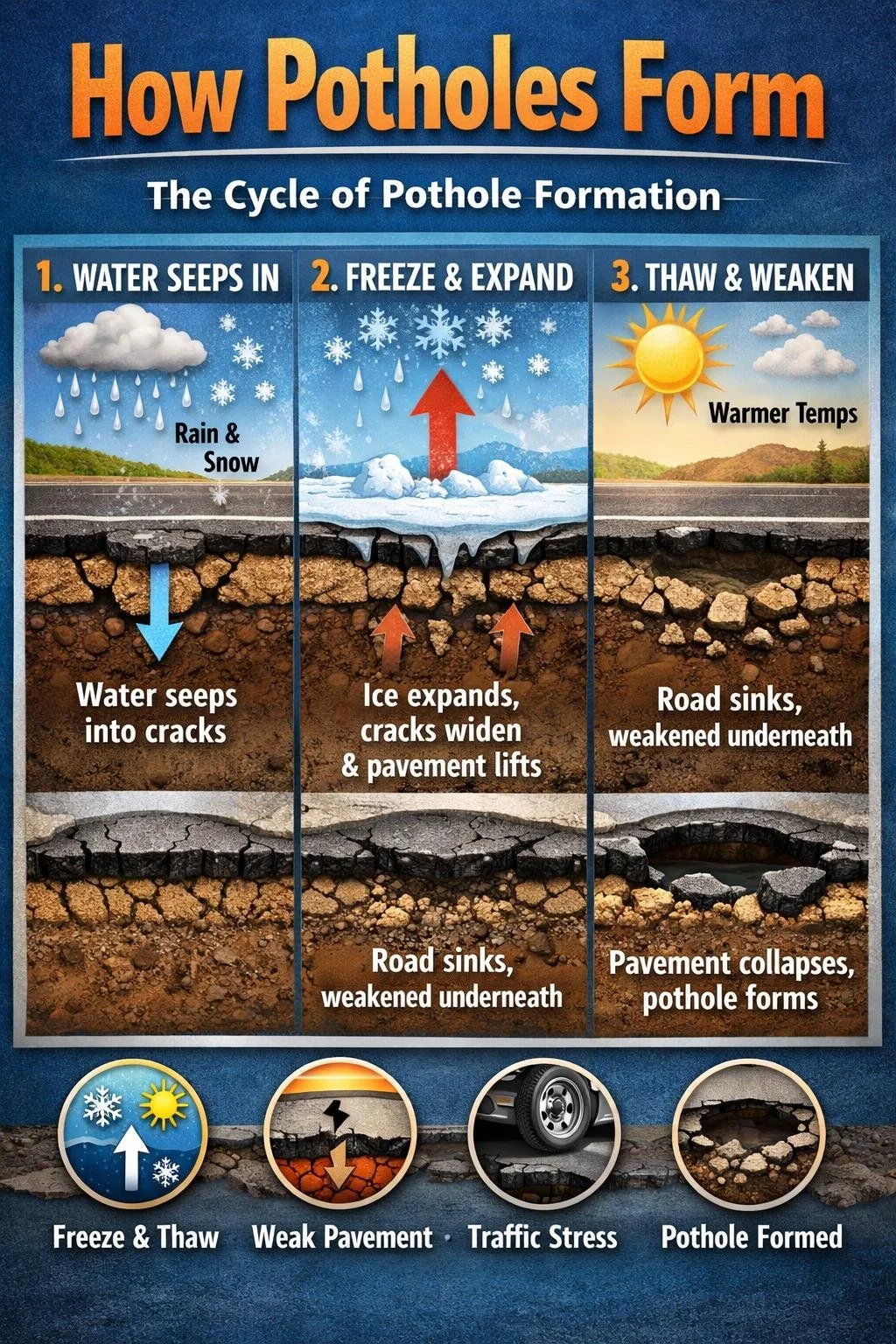
Potholes form through a cycle of water infiltration, temperature changes, and traffic stress that weakens the road until it collapses. While they are most common in cold climates due to freezing, they also occur in warm regions through erosion.
The Pothole Formation Process
Water Infiltration: Rain or melted snow seeps into small, pre-existing cracks in the asphalt surface or through the edges of the road.
Weakening the Base: This water saturates the soil and stone layers (the sub-base) beneath the pavement, making them soft and unstable.
Freeze-Thaw Cycles: In cold climates, the trapped water freezes and expands, pushing the pavement upward (a process called frost heave). When the ice melts, it leaves a hollow air pocket or "void" beneath the asphalt.
Traffic Stress: As vehicles drive over these weakened or hollow areas, the unsupported asphalt sags and eventually cracks.
Collapse: The weight of tires continues to pound the fractured pavement until it breaks apart and collapses into the void, creating the hole.
Contributing Factors
Weather: Spring is the peak season for potholes because frequent daily temperature fluctuations (above freezing by day, below freezing at night) accelerate the freeze-thaw cycle.
Heavy Traffic: Larger, heavier vehicles like trucks and buses exert more pressure, causing the road surface to degrade faster once it is weakened.
Poor Drainage: If water cannot drain away from the road foundation, it remains trapped to cause erosion or freezing damage.
Road Salt: Salt lowers the freezing point of water, which can actually increase the number of freeze-thaw cycles the road experiences.